
Weekly Update – June 24th – Cattail Mosquitoes Emerging in Some Areas
July 2, 2025
Weekly Update – July 8th – Mosquitoes Exceed 10-Year Average, Highest Week Since 2020
July 16, 2025
We reached our highest point of the season during the average peak of the 1st week of July.
Mosquito numbers are at the highest level we've seen since 2020 thanks to rain, the emergence of cattail mosquitoes, and a few hot spots.
Every Monday night starting in mid-May through September, the Metropolitan Mosquito Control District sets out a variety of mosquito and black fly traps throughout the district and employs a network of sweep net collections done by employees and volunteers. Any insects collected are brought back to our lab on Tuesday to be identified throughout the week with maps published to show current mosquito and black fly activity.
The increase in mosquitoes over the last two weeks likely became noticeable for the first time if you live in certain areas of the Twin Cities. After several weeks of very low activity due to minimal snowmelt, we've been gradually increasing and last week's trap collections were the highest we've seen yet this season and the highest overall total we've seen since this same week in 2020.
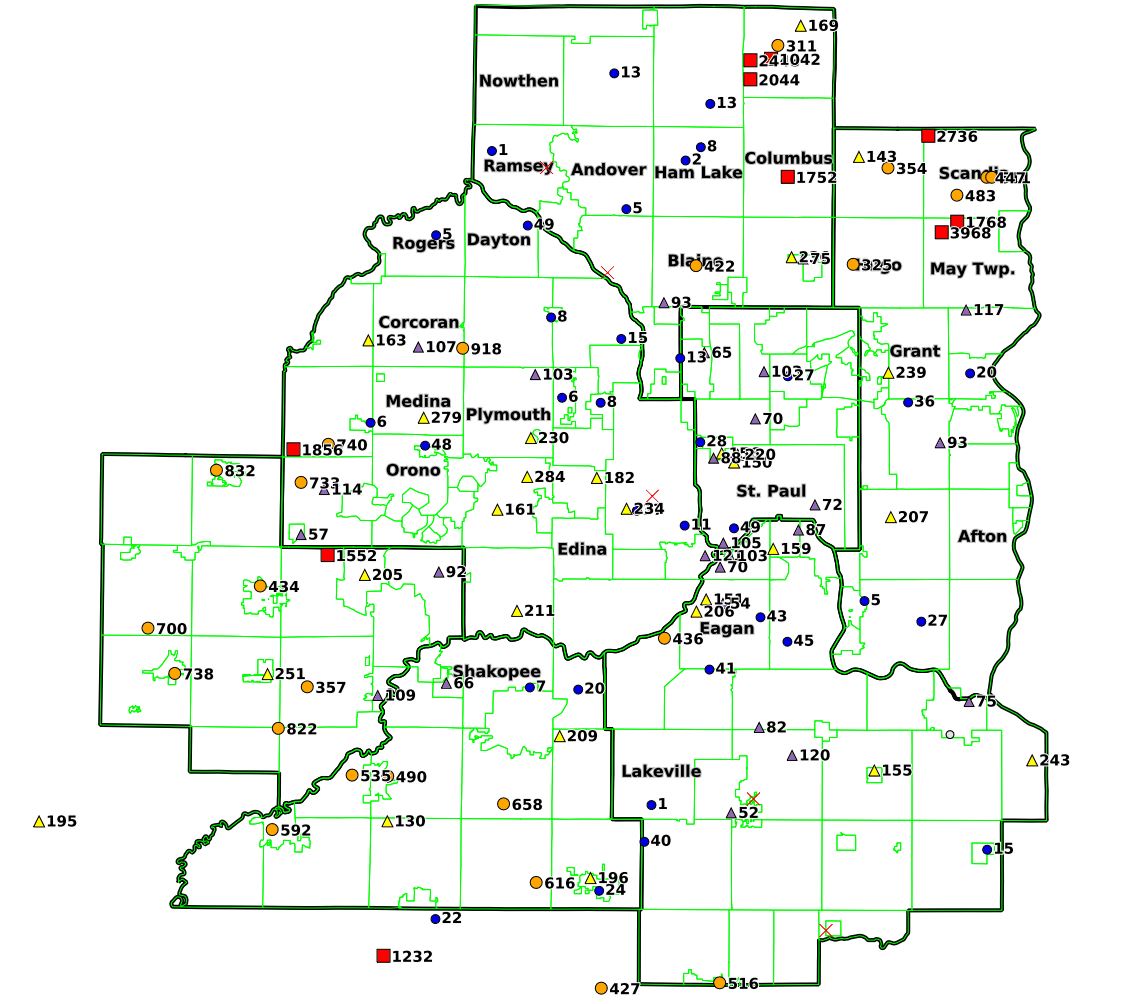
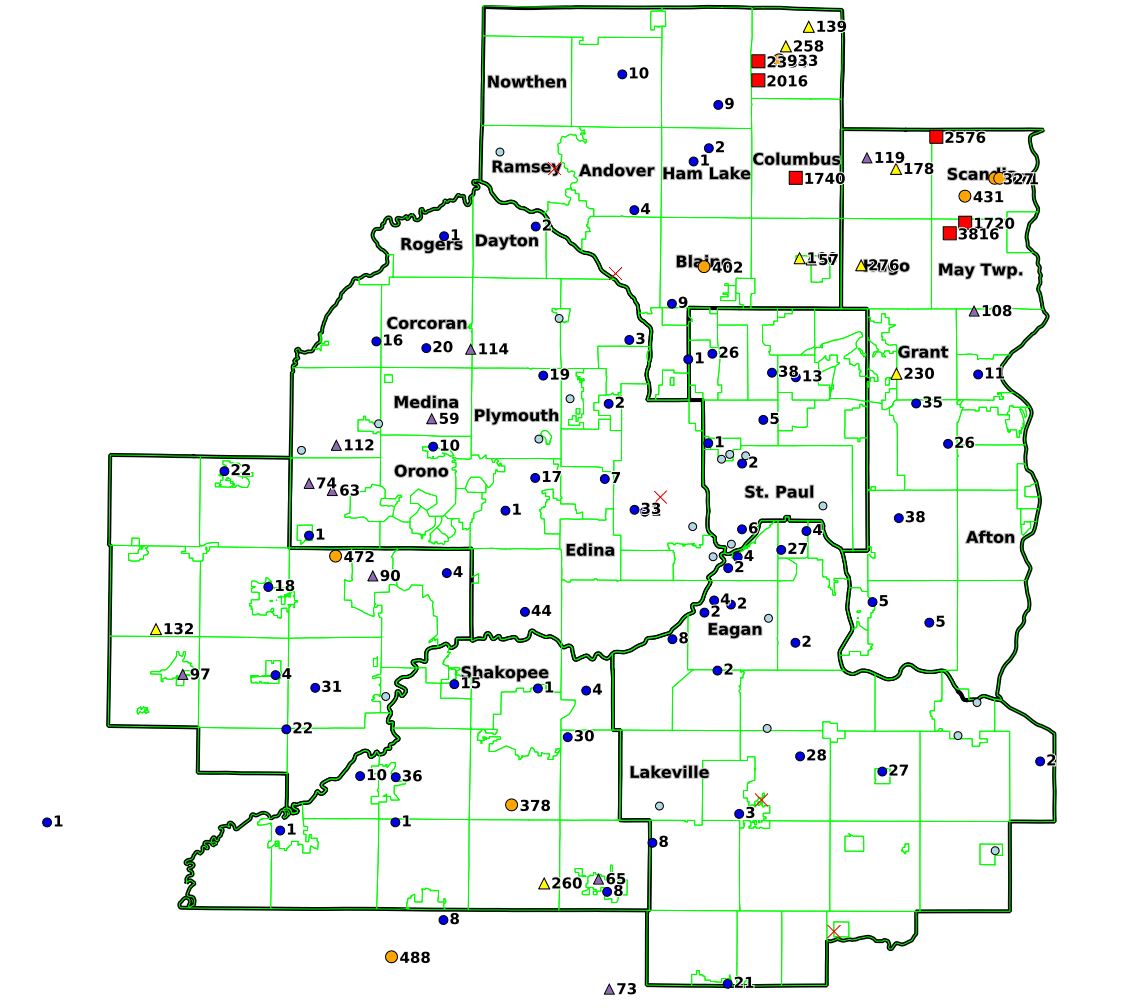
This is in large part due to certain hot spots in the District that saw a high emergence of cattail mosquitoes over the past few weeks. Cattail mosquitoes (Coquillettidia perturbans) are a species that hatch from eggs in the fall and overwinter as larvae before emerging from the water in a single brood around the beginning of July. About two thirds of the species caught in traps last week were cattail mosquitoes and there are some especially hot spots in the northern part of the District (see maps below).
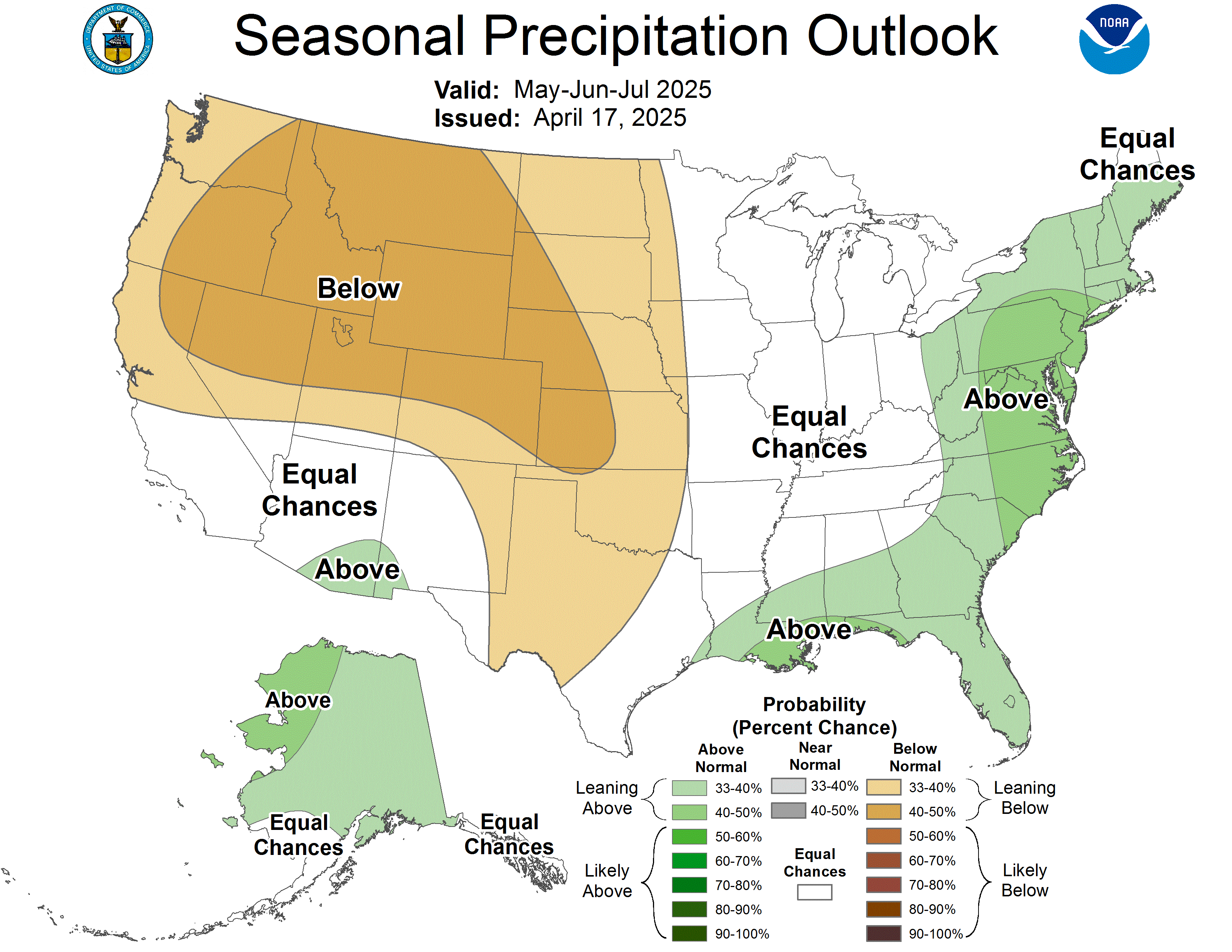
Are we currently in the peak of mosquito activity for 2025 or is there more coming? We will start to get an idea after the current week's collections to see if cattail mosquito numbers continue to rise, or if they have peaked and will begin their typical descent through the rest of July. The other unknown is the impact of floodwater mosquitoes like Aedes vexans that increase based on rain. If July and August see some heavy rainfall, then it's possible the peak is still to come, though the long-term climate predictions suggest that July and August may be drier than normal.
Below are maps showing all human-biting mosquitoes (left) and cattail mosquitoes (right) collected in CO2 traps on June 30th-July 1st:
Mosquito samples in Anoka and Carver Counties test positive for West Nile virus.
MMCD Vector Ecologist, Dr. Jordan Mandli, reported last week that mosquito pools collected at a trap in Ham Lake in Anoka County and near Hancock Township in Carver County have tested positive for West Nile virus. This is in line with when we typically start finding samples that test positive for the disease as the past three years the first positive results have come in late June and the presence of the virus in mosquito pools tends to increase as we head into the later summer months.
It is too early to determine if this will be a higher than average year for West Nile virus as disease transmission is highest in the later summer months. In 2024 there were 34 human cases of West Nile virus statewide and 15 in District residents.
It is a good reminder that this is the time of year to take precautions like wearing insect repellent, emptying out standing water, and avoiding the outdoors during the peak mosquito feeding times of dawn and dusk.
Several news stations recently did stories about the current mosquito season including KARE 11 who compared our April prediction for the season with where things stand now that we have hit July. Check it out below: