

How MMCD Monitors Tick Populations via Dragging to Track Tick-Borne Diseases
July 30, 2025
Weekly Update – August 12th – Mosquitoes Right on Target with the 10-Year Average
August 15, 2025
Mosquito numbers continue to decline this week, in line with the 10-year average.
While nuisance mosquitoes continue to decline, the Twin Cities remains in an elevated risk year for West Nile virus.
Every Monday night starting in mid-May through September, the Metropolitan Mosquito Control District sets out a variety of mosquito and black fly traps throughout the district and employs a network of sweep net collections done by employees and volunteers. Any insects collected are brought back to our lab on Tuesday to be identified throughout the week with maps published to show current mosquito and black fly activity.
There may have been a noticeable decline in the overall number of mosquitoes lately, but it's certainly not time to let the guard down. Minnesota and the rest of the Midwest remain at elevated risk for West Nile virus transmission in 2025 and the risk of mosquito-borne disease transmission increases in the later summer months.
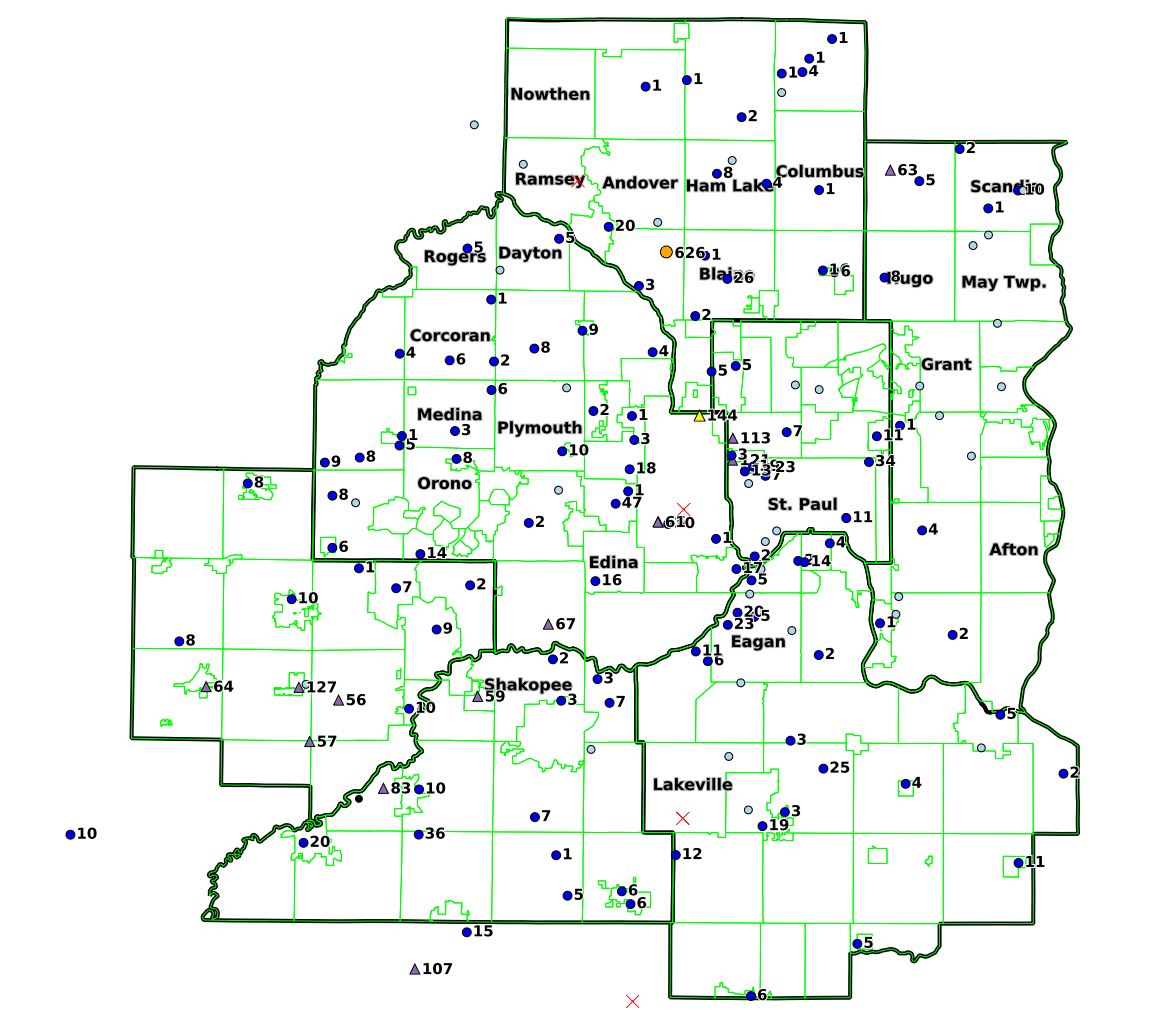
According to MMCD Vector Ecologist, Dr. Jordan Mandli, "The good news is that WNV-positive mosquito pools are on the decline. District-wide, our MIR [Minimum Infection Rate] currently stands at 17.55, a notable drop from 30.0 last week, though still slightly above the 14.1 recorded two weeks ago." Last week's MIR of 30 was the highest ever recorded by MMCD and this week's 17.55 remains higher than average, especially for late July. Mandli also says, "Other abatement districts across the Upper Midwest—including the Dakotas, Illinois, and Michigan—are also reporting increased WNV activity." Various reports have stated that 2025 is going to be an above average year for vector-borne disease due to hot, humid conditions and factors related to climate change.
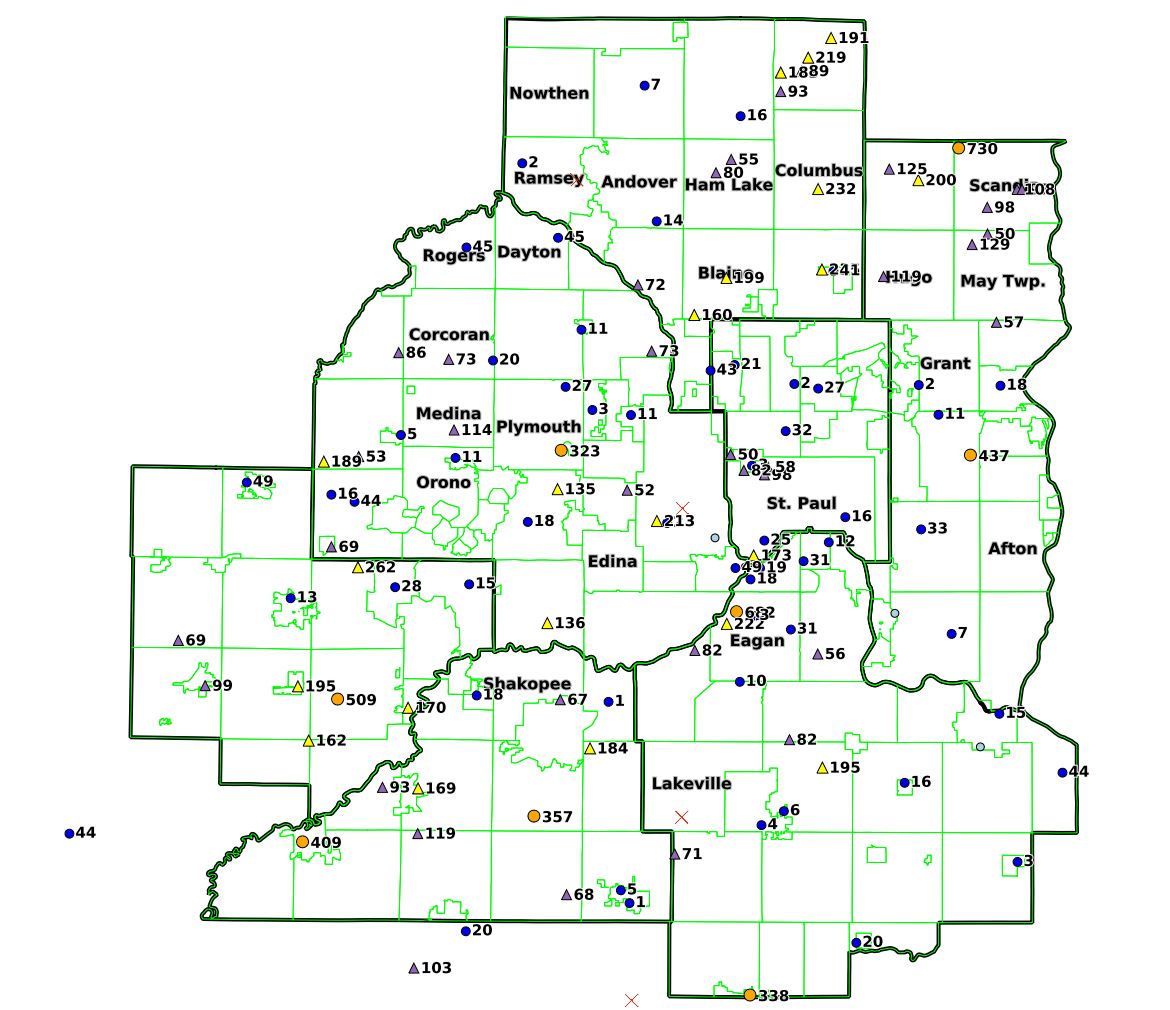
Excessive rain over the past several weeks have led MMCD field staff to treat over 30,000 acres of breeding mosquito habitat with helicopter activity occurring almost every weekday during the last two weeks of July. Despite this onslaught of rain, we have largely been able to stay ahead of potential broods and the overall number of human-biting mosquitoes continues to decline, which is in line with the 10-year average for early August.
Below are maps showing all human-biting mosquitoes (left) and Culex mosquitoes (right) collected in CO2 and Gravid traps on August 4th-5th:
More positive samples appear in every Twin Cities county. MMCD responds.
As samples continue to test positive for West Nile virus throughout the Twin Cities, MMCD has been responding by doing additional control measures in areas where the disease is most prevalent. Last week staff did some evening control measures at the Minnesota State Fairgrounds where over a million people are expected to gather next week.
One of the most important ways to reduce West Nile virus is to take personal protective measures. It is essential to continue to take precautions to avoid mosquito-borne disease including wearing insect repellent, emptying out standing water, and avoiding the outdoors during the peak activity time for mosquitoes which is the hour surrounding sunrise and sunset.
Learn more about protecting yourself from mosquitoes at the MMCD Resident's Guide.
Learn more about West Nile virus on the MMCD website.
Below is an interview with MMCD Vector Ecologist, Dr. Jordan Mandli, on Fox 9:


