

Weekly Update – August 26th – The End of Mosquito Season is Approaching!
September 3, 2025
Weekly Update – September 9th – Mosquitoes Slow Down, but Hot Spots Remain
September 16, 2025
The current number of human-biting mosquitoes is close to the average for this time of year.
Overall mosquito numbers ticked up slightly in the first week of September, but the increase is not likely to continue.
Every Monday night starting in mid-May through September, the Metropolitan Mosquito Control District sets out a variety of mosquito and black fly traps throughout the district and employs a network of sweep net collections done by employees and volunteers. Any insects collected are brought back to our lab on Tuesday to be identified throughout the week with maps published to show current mosquito and black fly activity.
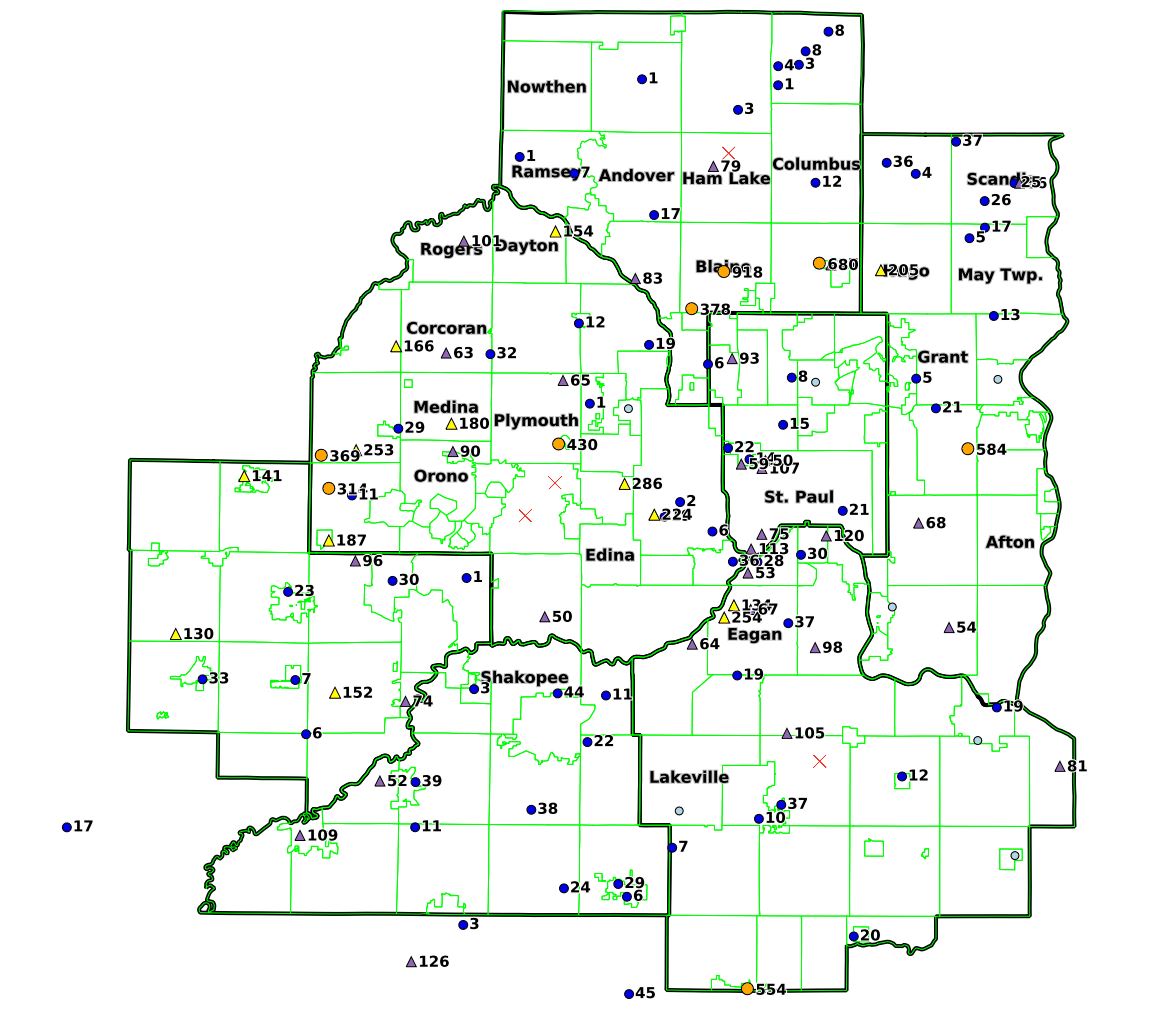
Despite cooler temperatures last week, mosquitoes were still active enough to cause a slight increase in our week-over-week totals in the Monday night CO2 traps. Several hot spots this week accounted for a significant amount of the number of mosquitoes. The CO2 trap in Blaine collected 918 human-biting mosquitoes last week, which was the highest for the current round and the highest of any CO2 trap since August 11th. Several other isolated areas had traps that collected over 300 mosquitoes including spots in central and western Hennepin County and central Washington County.
According to MMCD Entomologist, Dr. Scott Larson, "The forecast calls for temps in the high 70s/ low 80s, so the mosquitoes will continue to persist in the short term. There was a small increase in the number of human-biting mosquitoes last week although the population was only barely above the 10-year average."
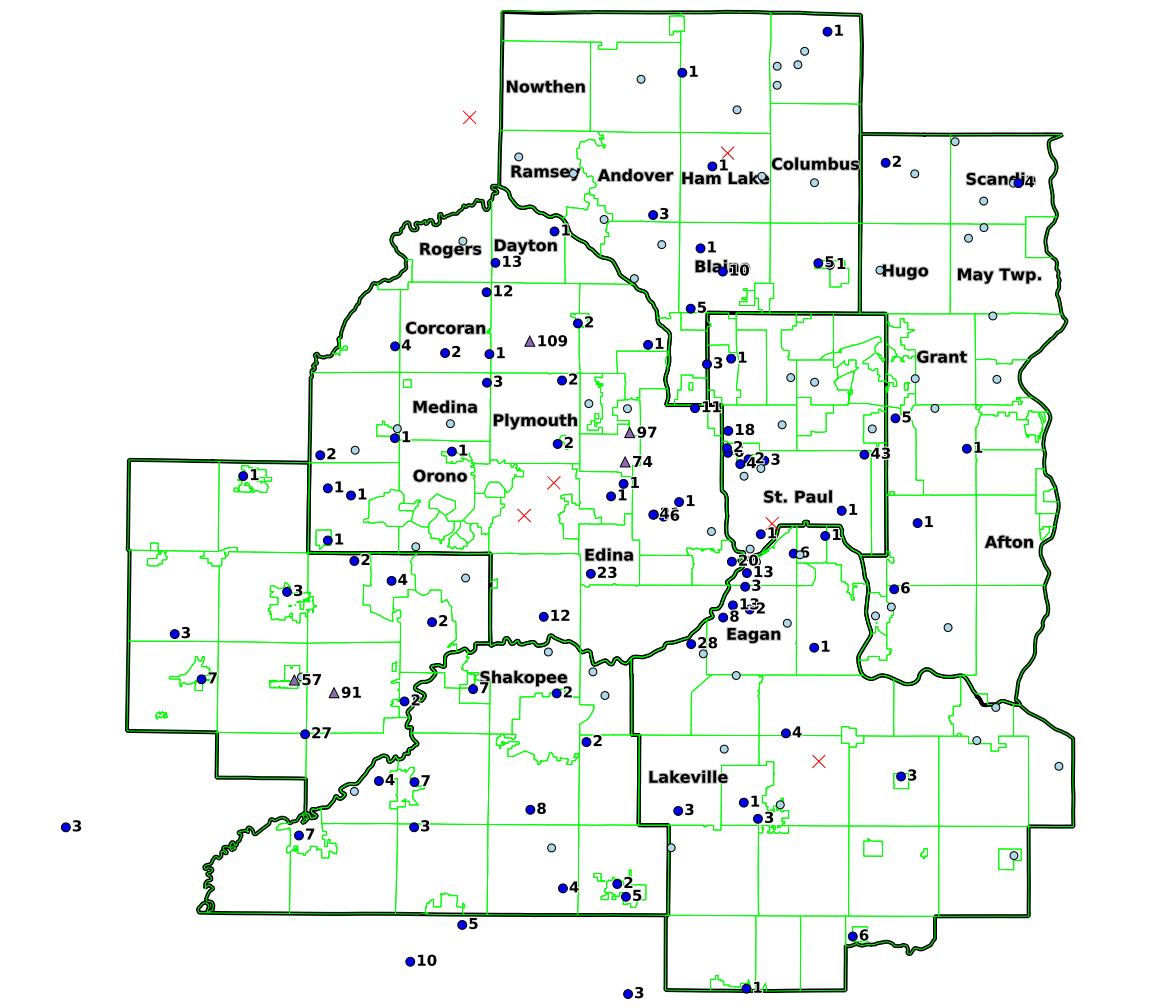
Below are maps showing all human-biting mosquitoes (left) and Culex mosquitoes (right) collected in CO2 and Gravid traps on September 2nd-3rd:
West Nile virus is likely to remain elevated until the season ends.
The overall number of mosquitoes is declining, but the risk of West Nile virus is still present. More mosquito pools tested positive in last week's collections and it is likely that the risk of West Nile virus will remain at least somewhat present until the complete end of the mosquito season.
According to MMCD Vector Ecologist, Dr. Jordan Mandli, "Over the past week, WNV activity declined slightly but remained elevated. Of the 99 mosquito pools tested, 31 returned positive RAMP values, resulting in a [Minimum Infection Rate] of 17.8, our second highest of the season! This matches the season high from 2018, which previously held the record."
It's always important to avoid mosquito bites, but the end of the season is especially critical. If your September plans have you active in the early evening hours, make sure to bring along the bug spray!
Cattail season is well underway at MMCD!
This is the time of year when MMCD shifts our work from summer floodwater mosquitoes like Aedes vexans to cattail mosquitoes (Coquillettidia perturbans). Cattail mosquitoes are a unique species that overwinters in the water, below the ice, as larvae. They swim down and attach themselves to the roots of vegetation (often cattails, hence the name) where they wait all winter before slowly working their way to the surface in the spring and emerging from the water all at once around the beginning of July.
Starting in September MMCD staff use a specialized dipper to seek out cattail mosquito larvae so that we may collect surveillance data for this species before the marshes freeze. Later this week field staff are planning to do a larval treatment by helicopter for some of the breeding sites that have been found to contain larvae. See our helicopter page for the list of planned cities.
A few years ago we created a video about cattail season at MMCD featuring Field Operations Supervisor Murray Parent. Check it out below:


