

Introducing the New LarvalCam! Watch Mosquito Babies LIVE
April 1, 2026
PRESS RELEASE: Mosquito Control activity is underway for 2026!
April 13, 2026

Mosquito larvae can be found in the water now.

Most won't emerge from the water for another month.
We may have another slow start to the mosquito season, but we are on tap for another mid-summer surge of cattail mosquitoes.
With the rollercoaster temperatures of spring in 2026, MMCD has already received numerous reports of mosquito activity on the scattered warm days that we've experienced. One resident in Chanhassen sent us a picture of two mosquitoes biting his leg while he was enjoying one of the 70-degree days. Staff have reported seeing mosquitoes while standing outside at a restaurant in Minneapolis, while doing yardwork in Roseville, and while skiing at Afton Alps (that was a first!).
District Entomologist Dr. Scott Larson says that the first mosquitoes to emerge as adults and seek a bloodmeal from a human are from the Anopheles family, which overwinter as adults and come out on some of the first warm days. They are likely the culprits for the few bites people may pick up on these early warm days. The rest of the mosquito population is likely not coming for several weeks, though larvae are active in the water now.
The first mosquito larva of 2026 was found by MMCD staff at our Rosemount Facility on March 12th and the first deer tick was picked up by a staff member at the Andover facility on March 9th. Both of these were prior to the big snowfall of March 15th which likely slowed them down, but both larvae and deer ticks have been spotted since then.
First Forecasts for 2026
Trying to predict overall mosquito populations this far in advance is like trying to predict if there's going to be a storm in July. However, there is one species that we can predict with some accuracy - Coquillettidia perturbans or "cattail mosquitoes." This species hatches in the fall and overwinters as larvae in the water where they attach to the root of cattail plants (hence the name) and wait until the spring where they all emerge in one brood around the beginning of July. After three years of low activity, 2025 saw a return of cattail mosquitoes due to rain from 2024. They were largely responsible for the mid-summer spike we saw last year.
This year the model is projecting that it will be another high year for cattail mosquitoes - the prediction exceeds last year's total, but is lower than last year's projection (Figure 1 below). It should be noted that the overall number of cattail mosquitoes came in significantly lower than the model projected in 2025 and that's due in part to additional treatments by MMCD. When Spring mosquitoes were mostly absent last year it allowed staff to re-focus efforts and apply more treatments to wetlands where cattail mosquito larvae was found. This year MMCD is planning to pre-emptively direct resources to cattail mosquito treatments, which will hopefully help reduce their overall numbers, especially in highly populated areas.

Figure 1: Cattail mosquito model as seen in the 2025 MMCD Annual Report.
2026 has been drier than normal, but April showers could bring May mosquitoes.
Despite a few news-making snowfall events, the Twin Cities is overall just below average for precipitation in 2026. Spring aedes or "snowmelt mosquitoes" are the first to hatch and they prefer vernal pools and flooded river bottoms. Based on our initial surveillance, many of these locations are still lower than normal.
In 2025 we had very few spring mosquitoes thanks to a dry February through April and Dr. Larson estimates that may be the case again in 2026. Significant rainfall in April could change that estimate, however, especially if it causes the river levels to rise significantly.
With much of the snow melted, river levels are mostly considered at Medium depth throughout the metro area according to the Minnesota DNR. Again, spring rain could change things, but currently MMCD Black Fly Specialist Carey LaMere is predicting average numbers of black flies (biting gnats) to start the year.
Long-term climate predictions suggest average precipitation for 2026.
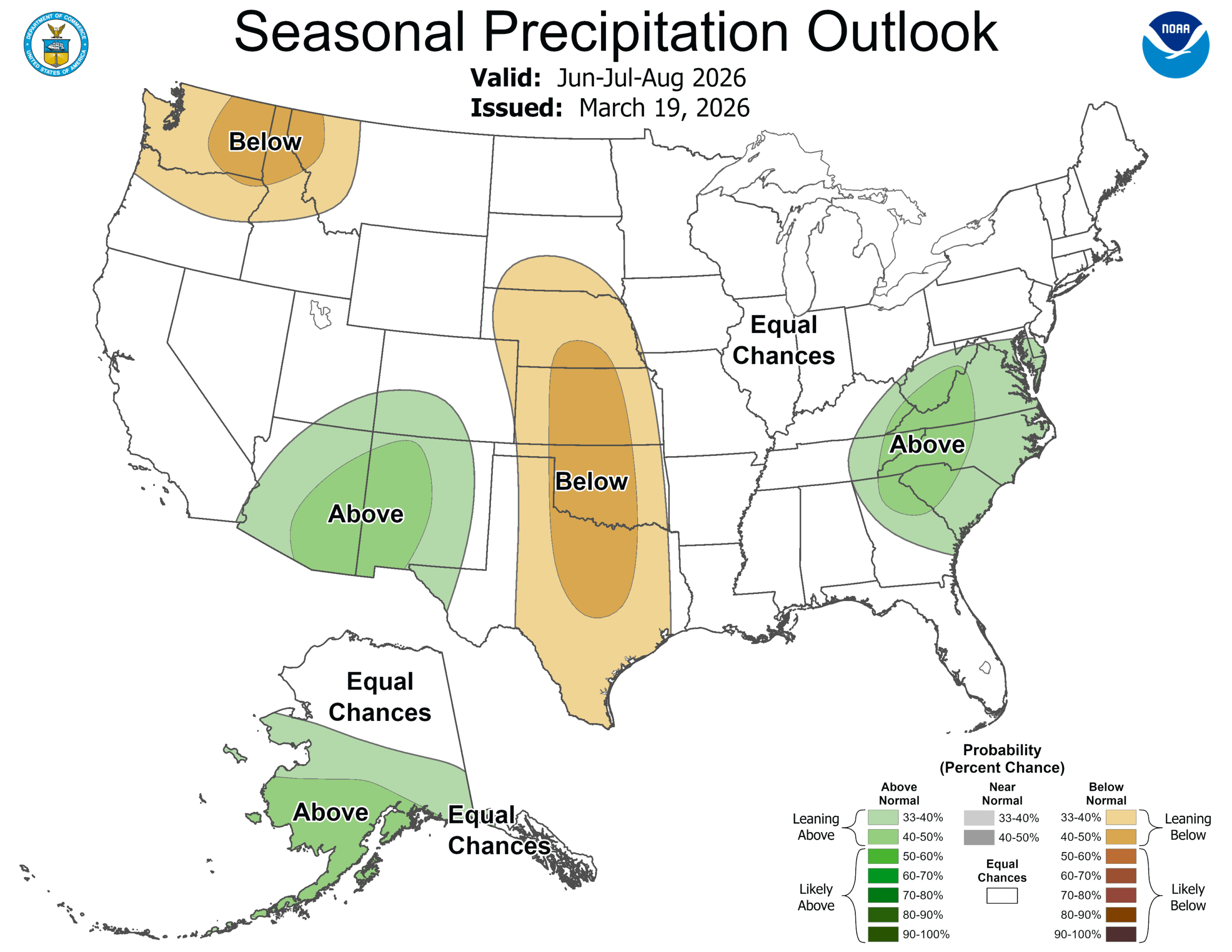 Predicting the weather a few months from now is a difficult task, but we look to the National Weather Service for long-term predictions on temperature and precipitation. Their model suggests that the Twin Cities has "Equal Chances" of a wet or dry summer. This most likely means precipitation this year will be average. Our most common mosquito - the Aedes vexans or "summer floodwater mosquito" is highly dependent on rain, so their numbers will change based on when rains come. Last year after the cattail surge in July, we stayed pretty much average for mosquito totals through the rest of the summer. Maybe that's in the cards again for 2026?
Last year's predictions by the National Weather Service suggested that Minnesota would be drier than normal and it turned out to be wetter than expected. A lot can change between now and mid-May, so we will continue to look at weather patterns to determine the best course of treatment.
Our seasonal species abundance surveillance using traps and sweep nets to collect adult mosquitoes will begin in May so we won't know the results of these predictions until then.

Spring of 2026 is trending a bit cooler than 2025.
Based on temperatures, air work likely to begin in mid-April.
At the Metropolitan Mosquito Control District we track days above 40 degrees Fahrenheit to get an estimate of when we can expect mosquitoes to become active. We also use this metric to help determine when we need to begin our treatments via ground, drone, or helicopter in ponds and wetlands where larvae are present. So far 2026 is trending cooler than 2025 and long-term weather projections suggest we will begin helicopter treatments in mid-April. Helicopter calibration to kick-off the season is scheduled for next week and we may begin treatments as early as April 13th.
Any planned helicopter activity will be posted on our website and social media with a list of cities. Throughout the summer helicopter activity is largely dependent on precipitation, so check back for our weekly updates on the current conditions.

First deer tick of 2026.

Found on March 9th.
Deer ticks are active and there may be a higher prevalence of Lyme disease in 2026.
Deer ticks will be active any time temperatures are above freezing and many people have reported already finding them in 2026. Our first staff member to find a deer tick was Abbey from our Andover facility who found one on March 9th. Deer ticks are responsible for the transmission of the pathogens that cause Lyme disease, anaplasmosis, babesiosis, and a host of other tick-borne illnesses. While overall tick numbers go up and down, the trend of Lyme disease cases in Minnesota and throughout the U.S. has been increasing since 2000.
Based on trends observed by MMCD Tick Specialist Janet Jarnefeld, nymphal deer ticks may have a higher prevalence of Lyme disease and other tick-borne illnesses in 2026. Ticks have a three year life cycle from egg to larva to nymph to adult. The nymphs peak in May and June when they emerge after overwintering. Jarnefeld reports that the trend of larval tick activity has been pushing to later in the fall, which would mean a higher prevalence of infected nymphal deer ticks the following spring.
It's always important to take precautions to avoid tick bites like wearing light colored clothing, applying bug spray, and doing thorough tick checks after being outdoors. To avoid tick-borne illness, taking those steps will be more important than ever in 2026.
Seasonal staff will begin work on April 13th so expect to start seeing MMCD trucks, helicopters, and drones in your community very soon. We will continue to provide updates throughout the season on anything that may inform or alter our predictions.
Be sure to revisit MMCD.org every week this summer for updates on mosquitoes, black flies, and ticks!


