

Weekly Update – July 8th – Mosquitoes Exceed 10-Year Average, Highest Week Since 2020
July 16, 2025
How MMCD Monitors Tick Populations via Dragging to Track Tick-Borne Diseases
July 30, 2025

Mosquitoes dropped back below average this week, but it's not time to put away the bug spray.
Adult mosquito numbers dropped back below average last week and we may be past the peak for annoyance mosquitoes, but West Nile vectors are thriving.
Every Monday night starting in mid-May through September, the Metropolitan Mosquito Control District sets out a variety of mosquito and black fly traps throughout the district and employs a network of sweep net collections done by employees and volunteers. Any insects collected are brought back to our lab on Tuesday to be identified throughout the week with maps published to show current mosquito and black fly activity.
After one big week, we are back below the 10-year average for human-biting mosquitoes for the week of July 15th. As the gray line above indicates, early July is typically when we see a surge in mosquito activity because of the emergence of cattail mosquitoes. This week that surge may have come a week later, but it came in the highest amount we've seen since 2020. Last week the numbers were back below average, likely because cattail mosquito numbers have begun to subside.
According to MMCD Entomologist, Dr. Scott Larson, "the number of cattail mosquitoes and floodwater mosquitoes are both down. The number of Culex tarsalis, however, are way up. Up both this last week and this year. There were a couple [of] traps with over 100 in each and that really is atypical." Culex tarsalis, or the Western Encephalitis Mosquito, is the species most responsible for transmission of West Nile virus to humans in Minnesota. Overall, throughout the District the number of Culex tarsalis mosquitoes are among the highest numbers MMCD has ever collected. The graph below depicts prevalence of Culex tarsalis mosquitoes for each of the past 10 years:

If you look at the Y-axis above, you see that the number of Culex mosquitoes collected per trap are still well below how many cattail mosquitoes or other human-biting species we may collect, but their ability to transmit disease does make the rise concerning.
Below are maps showing all human-biting mosquitoes (left) and cattail mosquitoes (right) collected in CO2 traps on July 14th-15th:
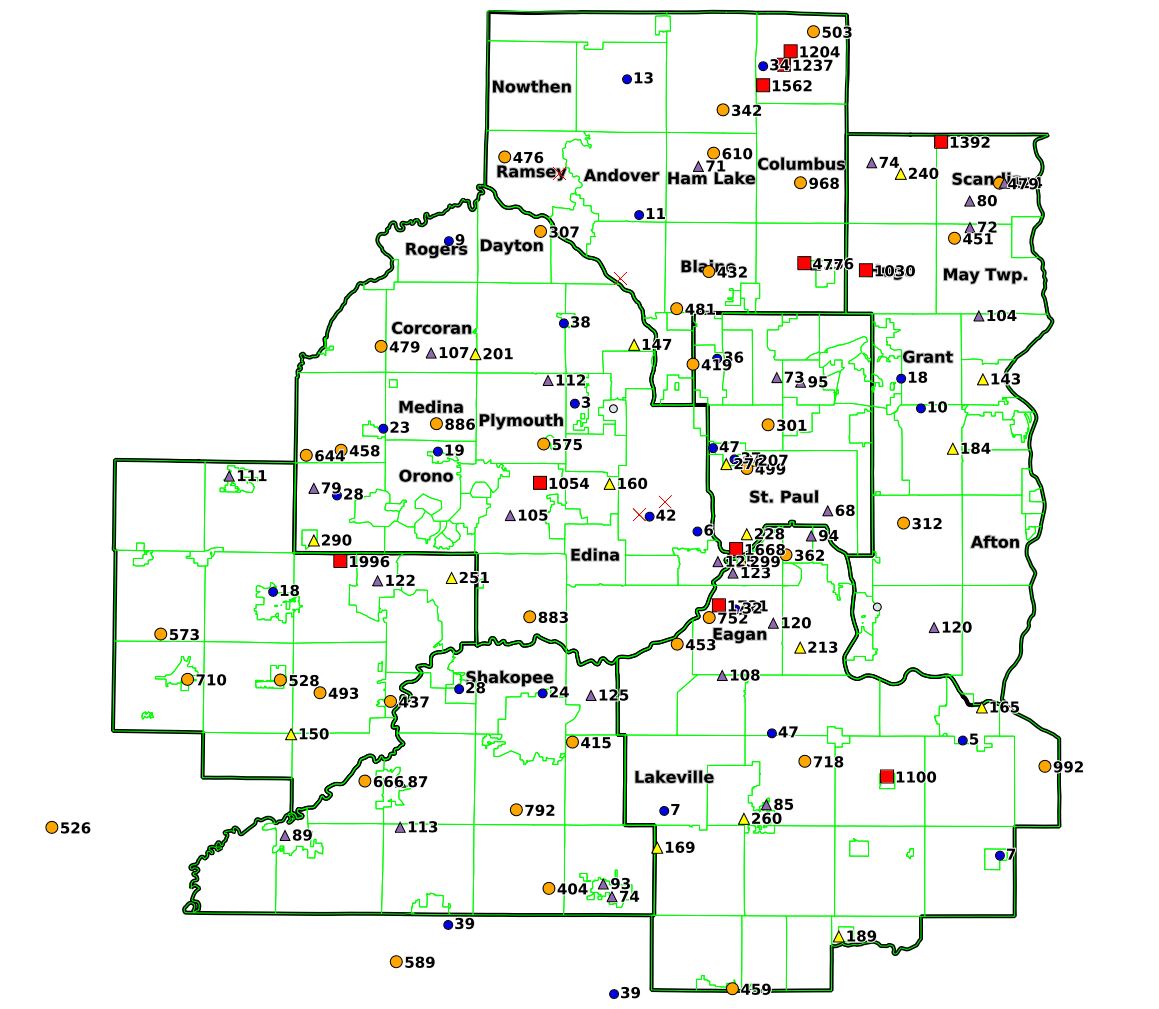
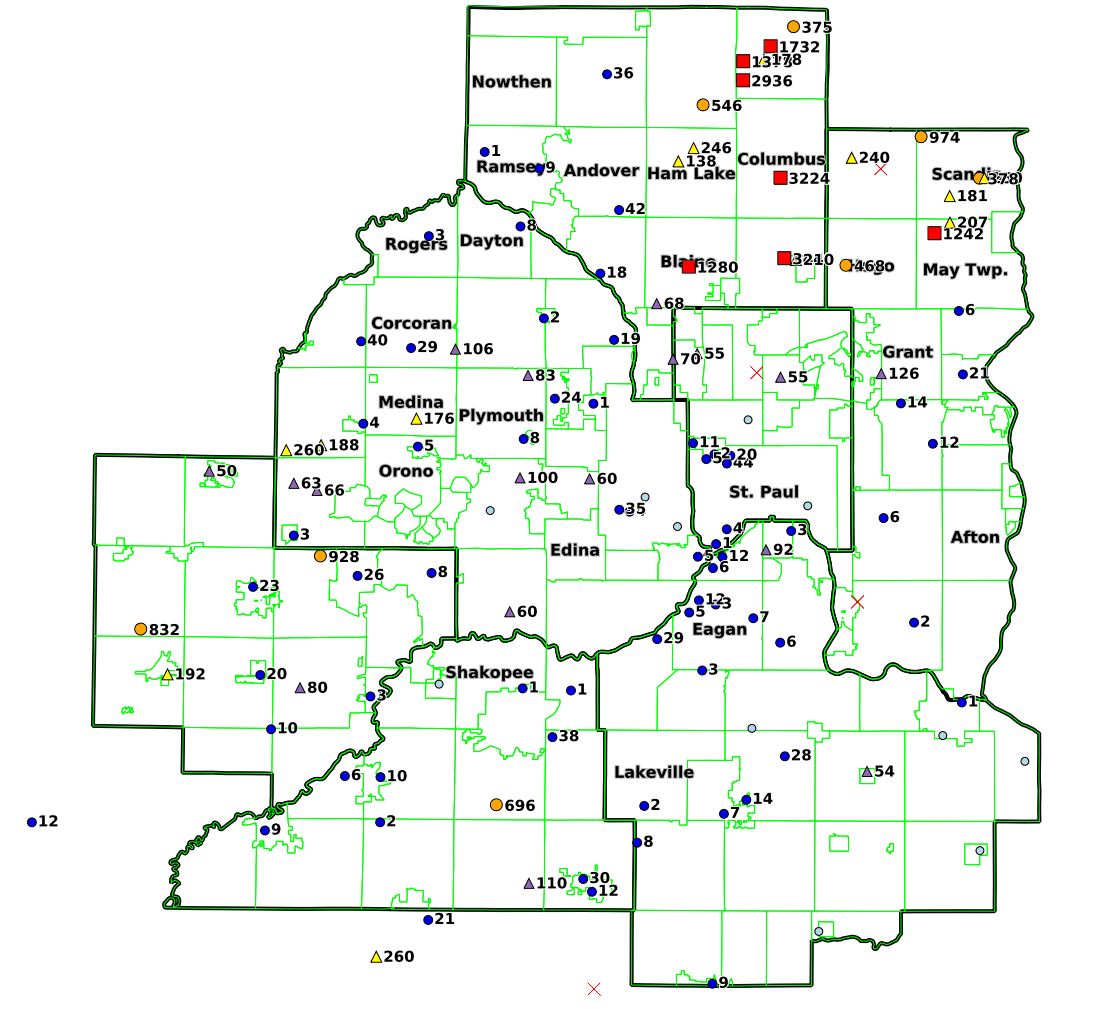
West Nile virus is present in every county. The positivity rate in samples is high for this early in the season.
The rise in the presence of Culex tarsalis mosquitoes has unfortunately been accompanied by a rise in West Nile virus activity among mosquitoes collected. When talking about the surge in that species, MMCD Vector Ecologist, Dr. Jordan Mandli says, "This surge has unfortunately been accompanied by a notable increase in WNV detections. Last week, our lab processed 187 mosquito pools- some traps yielded over 900 Cx. tarsalis. Of the 133 pools tested, 34 tested positive for WNV, representing over 25% positivity." Mandli explains that this is one of the highest positivity rates we have ever seen in July and is more typical with late-August when the mosquito populations are winding down.
The Minnesota Department of Health has reported to the Centers for Disease Control that a human case of West Nile virus has been found in Dakota County. This is the first reported human case for 2025 in Minnesota. There were 35 human cases in Minnesota in 2024.
It is essential to continue to take precautions to avoid mosquito-borne disease including wearing insect repellent, emptying out standing water, and avoiding the outdoors during the peak activity time for mosquitoes which is the hour surrounding sunrise and sunset.
Learn more about protecting yourself from mosquitoes at the MMCD Resident's Guide.
Learn more about West Nile virus on the MMCD website.


