

Weekly Update – September 23rd – Mosquitoes Mostly Gone, Despite Warm Temperatures
September 30, 2025
Introducing the 2025 MMCD Annual Report
February 26, 2026

Cattail mosquitoes made a big comeback in 2025. Staff checked wetlands in the Fall to prepare for 2026.
Metropolitan Mosquito Control District Season Highlights from 2025
This is the week when people share the many things to be thankful for, and here at MMCD we have plenty! We are grateful to the public for their support of mosquito control this year, we are grateful to the County Commissioners who have served on our board and supported MMCD through the challenging year that was 2025, and we are especially grateful to the amazing staff members who did all of the work to protect the public from mosquitoes, black flies, and ticks in 2025.
We have prepared some highlights to show the many areas of work that MMCD staff completed in 2025. Each city administrator or township clerk also received an individual report with activity from their community. Please contact us if you'd like more information about any MMCD activity!
Spring mosquitoes were not very active, but cattail mosquitoes returned
The years 2021-2023 were some of the driest we've seen in a while and then 2024 brought well above average precipitation. 2025 was back to mostly normal levels of rain, though some of the lingering impacts of the 2024 soaking impacted 2025. The season started with less snow than usual in March-April, which meant the usual surge of Spring Aedes mosquitoes did not show up this year. Over the past few years, melting snow or early spring rain has caused the river levels to rise and brought a significant hatch of Spring Aedes or "snowmelt mosquitoes."
The graph below depicts the total number of Spring Aedes mosquitoes collected from 2020-2025. Notice that 2025 saw the lowest peak of Spring Aedes mosquitoes in all of those years with numbers significantly lower than 2023 and 2024:

Meanwhile, Coquillettidia perturbans or "cattail mosquitoes" made a big comeback in 2025. This is one of our more unique species, and their overall numbers are more dependent on rain from the year before. Cattail mosquito eggs hatch in the fall and the larvae overwinters in the water. Unlike most species, which congregate near the water's surface, cattail mosquitoes swim down and attach their siphons to vegetation that sticks out of the water (often cattails, hence the name) and spend all winter below the ice, breathing through these plants. When spring comes, they work their way to the water's surface before eventually emerging from the water all at once, around the beginning of July. They spend their short lives aggressively biting large mammals (like us lucky humans), then they lay their eggs and the cycle begins again.
Because 2024 was one of the wettest we've seen in a while, cattail mosquito larvae had a winter of abundance and our model projected that they would have a big year in 2025. This projection mostly held true with the highest peak in cattail mosquitoes since 2020. However, thanks to the work of MMCD field staff, additional treatments kept the total number of cattail mosquitoes below the projection.
The graph below shows the number of cattail mosquitoes collected from 2020-2025:

Those two species largely tell the story of 2025. Our most abundant mosquitoes, which fall in a group known as Summer Aedes, came back in larger numbers than 2021-2024, but were not quite as abundant as the rainy years of 2016-2020. The graph below depicts the total number of human biting mosquitoes captured week to week in 2025 compared to the 10-year average:

We had a slow start to the season and then cattail mosquitoes surged, but beyond that we stayed close to average.
With all of this mosquito activity in 2025, our staff really stepped up and got work done to help reduce the risk of mosquito-borne disease and make the summer more tolerable for District residents. There are a number of different ways that staff reduce mosquito activity including larval control via helicopter, drone, backpack, or hand, removing mosquito habitat like waste tires, and treating catch basins and stormwater drains.
Below are some of the key numbers depicting mosquito control activity in 2025:
acres of larval treatments
tires removed and recycled
catch basins treated
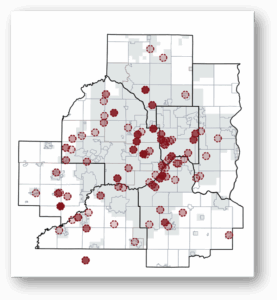
Locations with positive West Nile virus samples in 2025
Record year for West Nile virus detection in the District
As of the end of November, Minnesota has reported the third highest number of human infections of West Nile virus in the nation in 2025. In the Twin Cities, we experienced our highest number of human cases on record with 42 reported, greatly surpassing the previous high of 28. Several factors contributed to this increase including a high number of Culex tarsalis mosquitoes, which are the primary species responsible for WNV transmission, and high infection rates among mosquito pools appearing earlier than normal. MMCD took several steps to respond to this increase in disease activity including additional surveillance locations, targeted control measures in areas with elevated infection rates, and expanded media appearances and public outreach.
Culex mosquitoes often develop in human-made habitat like waste tires, loose tarps, clogged gutters, etc. Residents can be part of the effort to reduce mosquito-borne disease by taking steps to eliminate mosquito breeding locations. Visit our Resident's Guide with more tips.
MMCD News Stories from 2025:
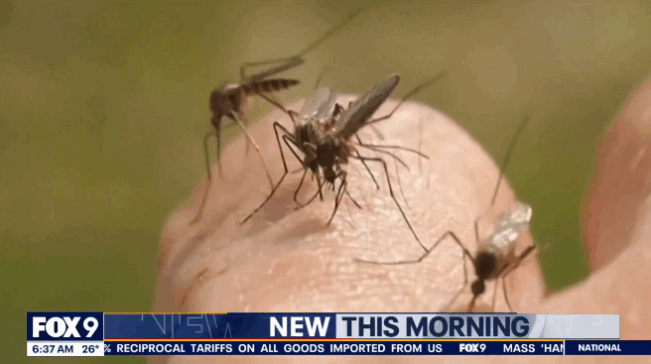
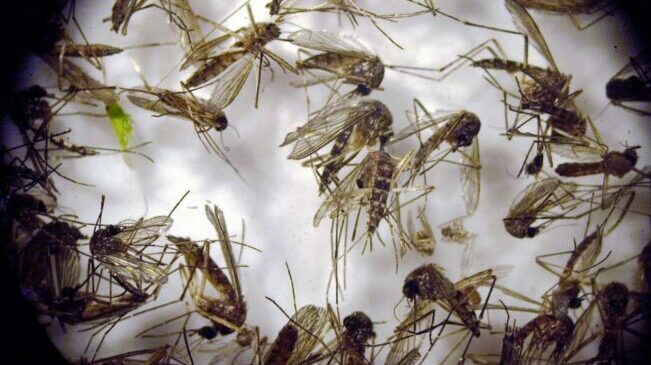
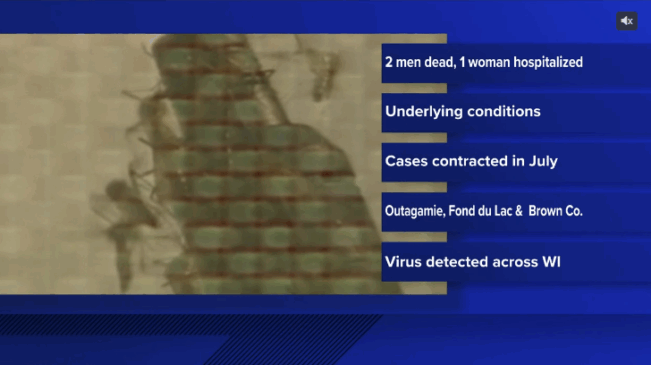
MMCD was featured in local news stories throughout the year to report information on overall mosquito numbers, control efforts that are underway, and alerts about elevated disease risk. Below is just a sample of some of the news appearances from the past year:
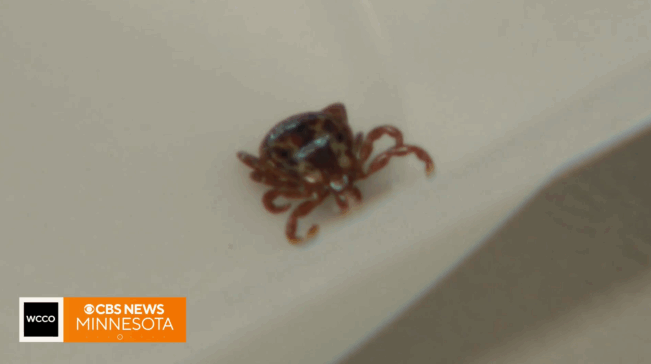
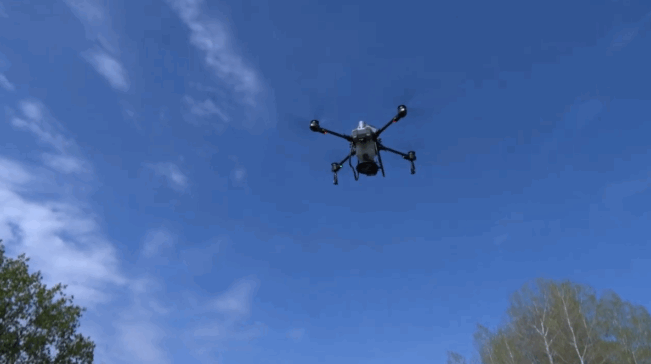

Black Flies Were Not as Prevalent, Ticks Prevalent in North and East
The number of biting black flies collected in sweep nets in 2025 (0.45/sweep) was lower than 2024 (1.13/sweep) and 2023 (0.9/sweep), due in part to lower river levels in the spring and a record number of small stream treatments done by MMCD in 2025.
Blacklegged ticks or “deer ticks” are collected by MMCD staff by trapping small mammal hosts, dragging cloths across the forest floor, and removing ticks found on themselves after being outdoors. In 2025, the highest number of blacklegged ticks were found in northern Anoka County and throughout Washington County. American dog ticks or “wood ticks” were most abundant in Dakota County.
Public Events and Education Outreach Were Big in 2025
Part of Integrated Pest Management involves educating the public about the biology of mosquitoes and ticks, vector-borne diseases, and personal protection. Throughout the year MMCD staff attend public events like county fairs, city festivals, and parades. We also deliver in-person presentations to schoolchildren and community members of all ages. This year we were active throughout the Twin Cities:
Public Events and Parades
School and Community Presentations
Students Reached at School Presentaions
Some of our big events this year included Grand Old Day in St. Paul, Open Streets in Minneapolis, the Minnesota State Fair, various Safety Camps, the Great Minnsect Show at the U of M, Game Fair in Ramsey, and various County Fairs.
We also delivered presentations at over 40 different schools and to various city councils and community groups. Presentations are free and cover lots of great information about the biting insects that live among us. If you are interested in having MMCD attend and event or deliver a presentation to your group, please contact Alex Carlson.
Below is a photo from our State Fair booth in 2025:

MMCD Video Highlights from 2025:
This year we were able to produce several new videos for residents thanks to help from our seasonal Public Affairs Assistant, Abbie Brown. Even more videos are going to be released in the coming year that were based on footage from 2025, so be sure to keep up with us on our blog. Click each image below to open a new window and view the videos. Be sure to follow us on YouTube where you can view all the videos that have been produced by MMCD over the years.


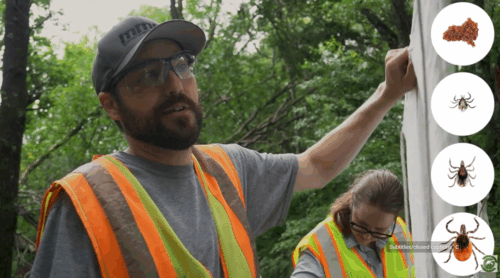
MMCD Was Social in 2025
In order to keep the public up to date on the lates activity, we were busy all season long on our Facebook, Instagram, LinkedIn, X, and BlueSky pages and we had great interactions with the thousands of people who follow us online. Be sure to keep up with our social media channels for the latest updates on mosquito numbers, disease cases, breaking news, trivia, fun facts, and a lot more!
MMCD Instagram Takeovers from 2025:
Each summer we encourage field and lab staff to take over our Instagram for the day and post up to date stories about what they're working on. Below are some of the Instagram takeovers from 2025. Visit the "Highlights" section of our profile page for more.

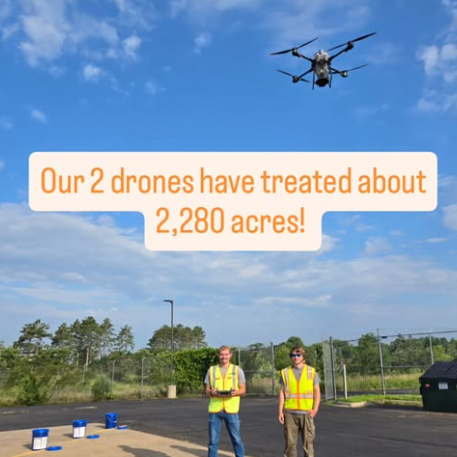

Looking Forward to 2026
There are still a few weeks of 2025 left, but we have already begun to look ahead to 2026. We will continue to inspect and treat breeding sites, control black fly populations, monitor tick activity, educate the public, and much, much more! Here are a few ways that you can connect with us next year:
- Work for MMCD! We are always recruiting for seasonal staff and we encourage you to think of us when looking for seasonal work! Our online application usually opens in February. View our employment page for more details or sign up to receive e-mail alerts about jobs.
- Invite Us to Present! Whether in-person or virtual, we are available to talk about mosquito science! If you know any schools or community groups who would benefit from a presentation about mosquito biology, control, diseases, and ways the public can get involved, contact us today!
- Follow Us on Social Media! We are active on Facebook, X, and Instagram where we regularly post pictures, news updates, and fun facts. Give us a follow!
We hope everyone has a great remainder of 2025!


