Tick Surveillance Program
Since 1990 the Metropolitan Mosquito Control District has been performing tick surveillance in the seven-county Twin Cities metro area to monitor disease and determine prevalence by county. There are several species of ticks found in Minnesota including three species that impact humans: black-legged ticks (deer ticks), American dog ticks (wood ticks), and lone star ticks. At MMCD we seek public assistance to identify unusual ticks and report high numbers during the season. Learn more about ticks in Minnesota, diseases to know, and the MMCD tick surveillance program below.
Types of Ticks in Minnesota
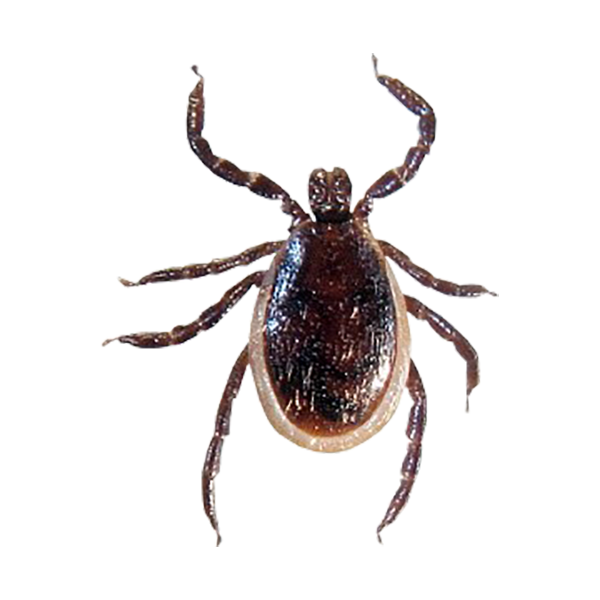
Blacklegged Tick or
|
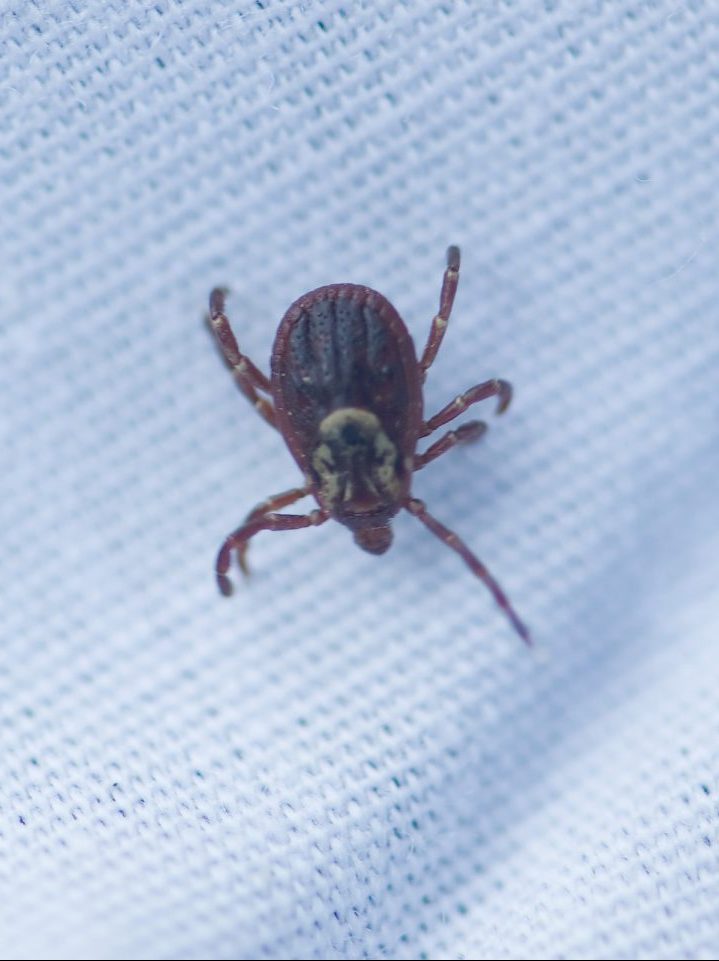
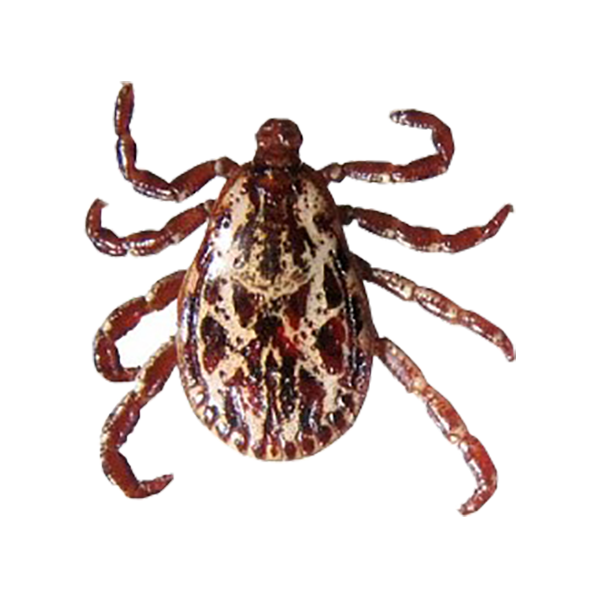
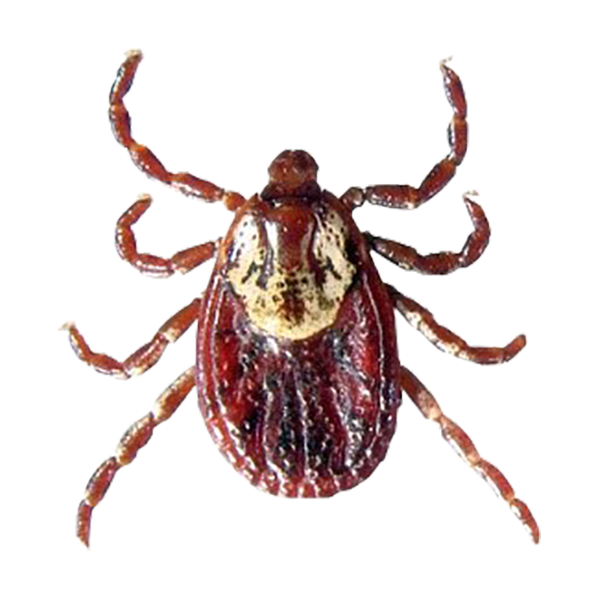
American Dog Tick or "Wood Tick" |
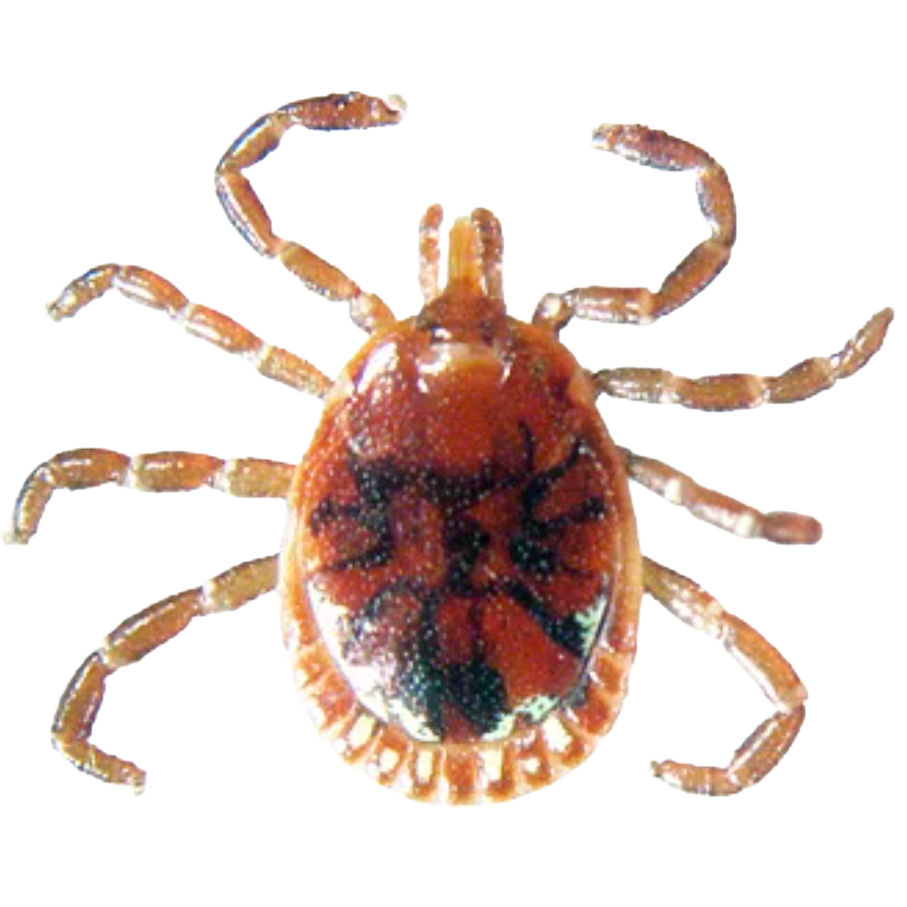
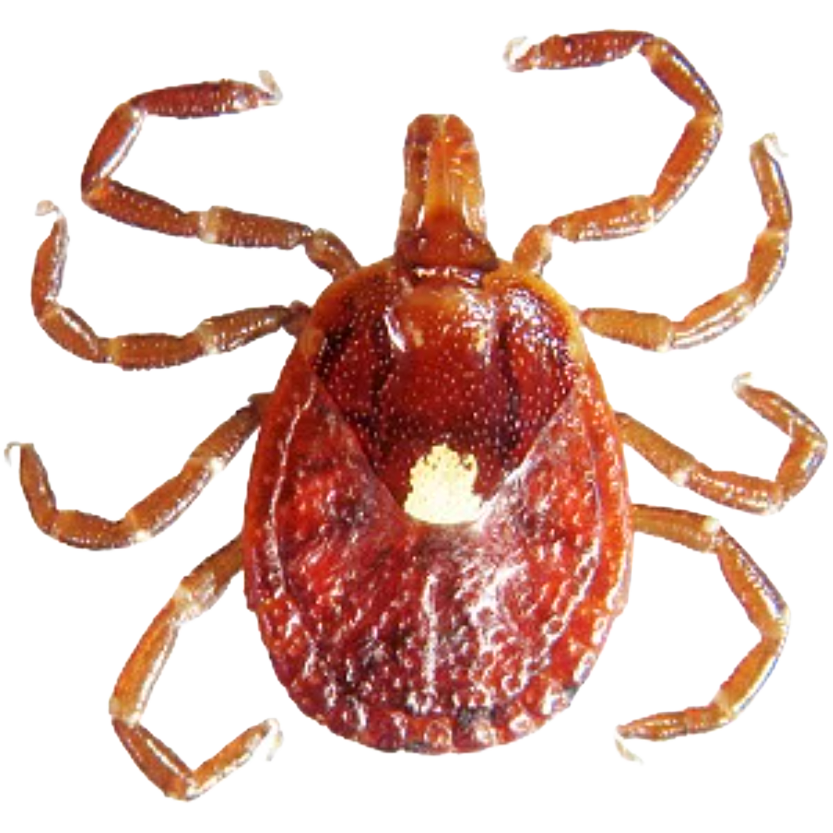
Lone Star Tick |
|
|---|---|---|---|
| Adult Male (Click image to enlarge) |
|||
| Adult Female (Click image to enlarge) |
|||
| Scientific Name | Ixodes scapularis | Dermacentor variabilis | Amblyomma americanum |
| Description and Features | Deer tick males are mostly black or dark brown. Adult females are slightly larger than males with a reddish-orange coloration on the lower half and black on top. Both sexes have black legs. | Wood tick males have a pale brown to gray base color with creamy-yellow, lightning pattern. Adult females have a dark brown body with a cream color U-shaped pattern near the mouthparts with dark brown markings. | Lone star tick females are recognizable by their single yellowish-white dot (the "lone star") on the backside or scutum. Lone star tick males are pale brown with mottled black on the scutum. |
| Habitat | Wooded areas, low-lying vegetation, woodlots near property | Tall grasses, weedy roadsides, edges of paths, wooded hiking trails. | Wooded areas with dense, low-lying vegetation. |
| Hosts | Larvae prefer small mammals and birds. Nymphs will feed on small, medium, and large animals including humans. Adult deer ticks prefer large mammals, especially deer. | Larvae and nymphs prefer small to medium sized mammals like rodents, rabbits, cats, and dogs. Adults prefer dogs and large mammals like cattle, horses, and humans. | Larvae and nymphs prefer deer and small mammals. Nymph and adult stages prefer deer, but will attach to other large mammals like dogs, coyotes, cattle, and humans. |
| Disease Pathogens | Deer ticks transmit the pathogens that cause Lyme disease, which is the most common tick-borne illness in the United States. Other diseases include babesiosis, ehrlichiosis, and human anaplasmosis. | Disease transmission in Minnesota is rare, but wood ticks could transmit pathogens that lead to Rocky Mountain spotted fever and tularemia. | Lone star ticks are responsible for Alpha-gal syndrome, which causes a red meat allergy in humans. They can also transmit pathogens that lead to ehrlichiosis and tularemia. |
| Prevalence | Common throughout the seven county metro area especially the north and east metro. Read MMCD's latest Lyme tick distribution study. | Very common throughout the seven county metro area. | Rare in Minnesota, but more common in summers that follow a warm winter. |
The Tick Life Cycle
Ticks have four stages in their life cycle: egg, the 6-legged larva, and 8-legged nymph and adult (male or female). Most ticks have a 3-host life cycle meaning at each stage of development they feed on a separate animal host. Here is an example of the life cycle stages for a blacklegged tick:
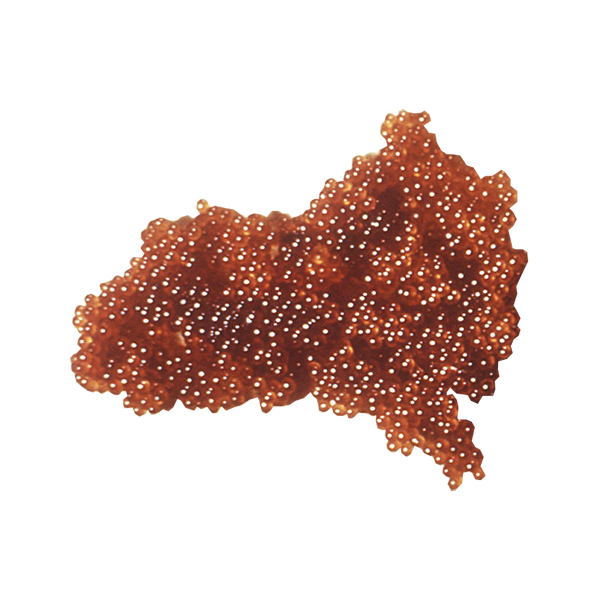
Eggs
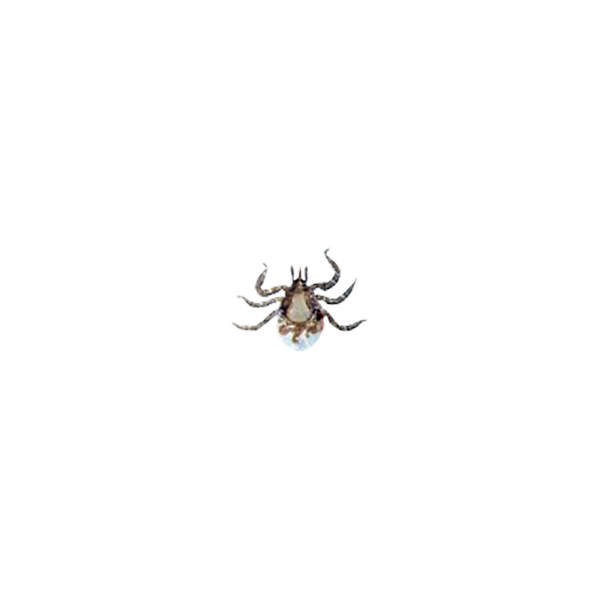
Larva
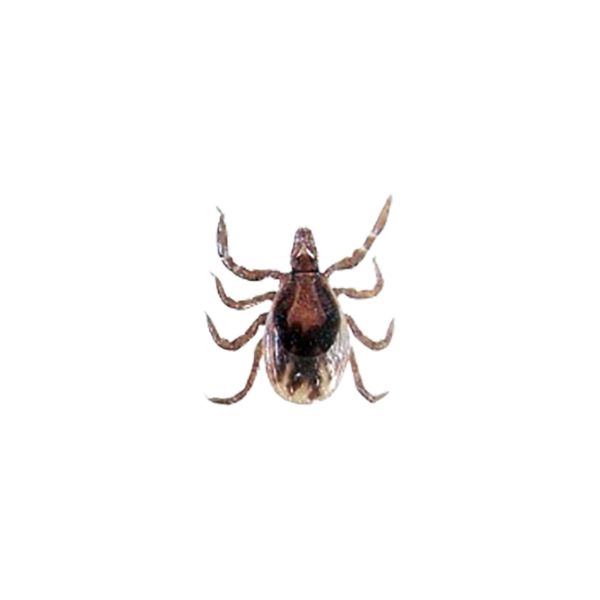
Nymph
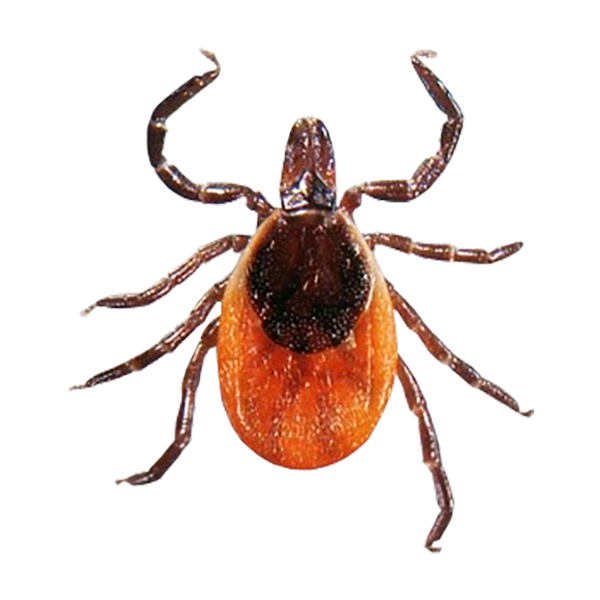
Adult (Female)
Ticks Activity Periods in Minnesota
Not all species of ticks follow the exact same patterns, but here is a helpful guide to when you need to be the most cautious about ticks:
Nymph Blacklegged Ticks

Nymph ticks are not active in the winter months. Beginning in April they will start to emerge with peak activity happening in May and June. They are less prevalent in the latter summer months and early fall and by October they are mostly dormant for the season.
Adult Blacklegged Ticks

Adult ticks are not common in winter months, though they may be active when temperatures are above 40 degrees, especially if there is limited snow cover. Typically they start being active in March with their activity peaking in May, June, and July. They have a slow period in August and early September before re-emerging in the Fall where they will remain active until there are consistent freezing temperatures.
MMCD Tick Surveillance
Ticks are hearty creatures that have adapted to survive in different climates and habitats. There is no environmentally safe, effective way to accomplish widespread tick control and MMCD does not undertake control efforts to reduce the tick population. The tick surveillance program is designed to collect, test, and report on tick populations to inform education programs and provide data for local public health departments. There are three primary ways MMCD conducts tick surveillance:
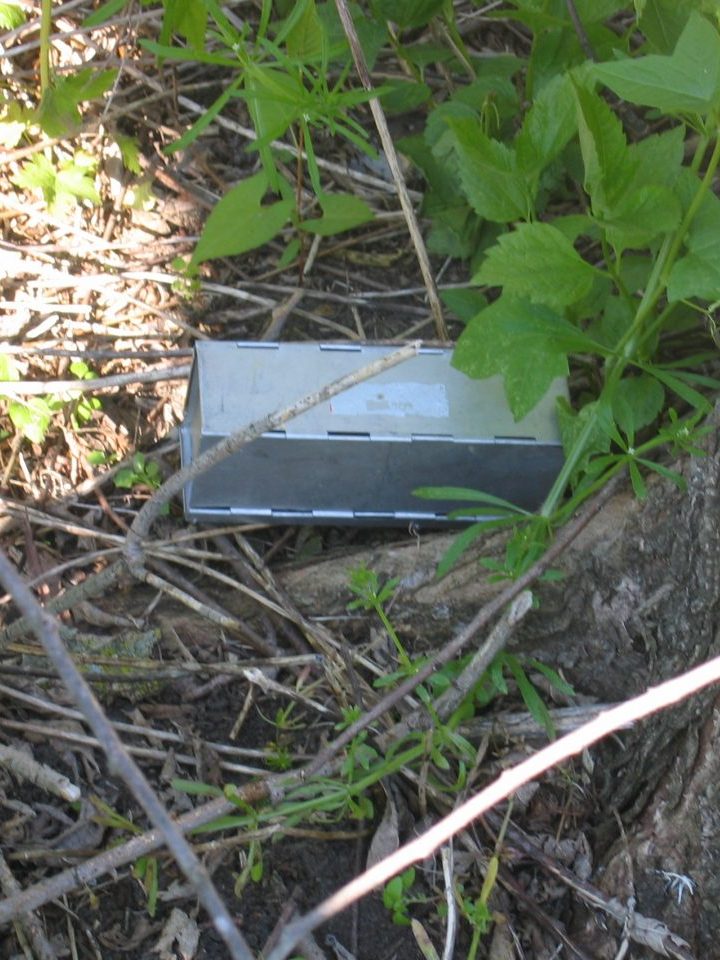
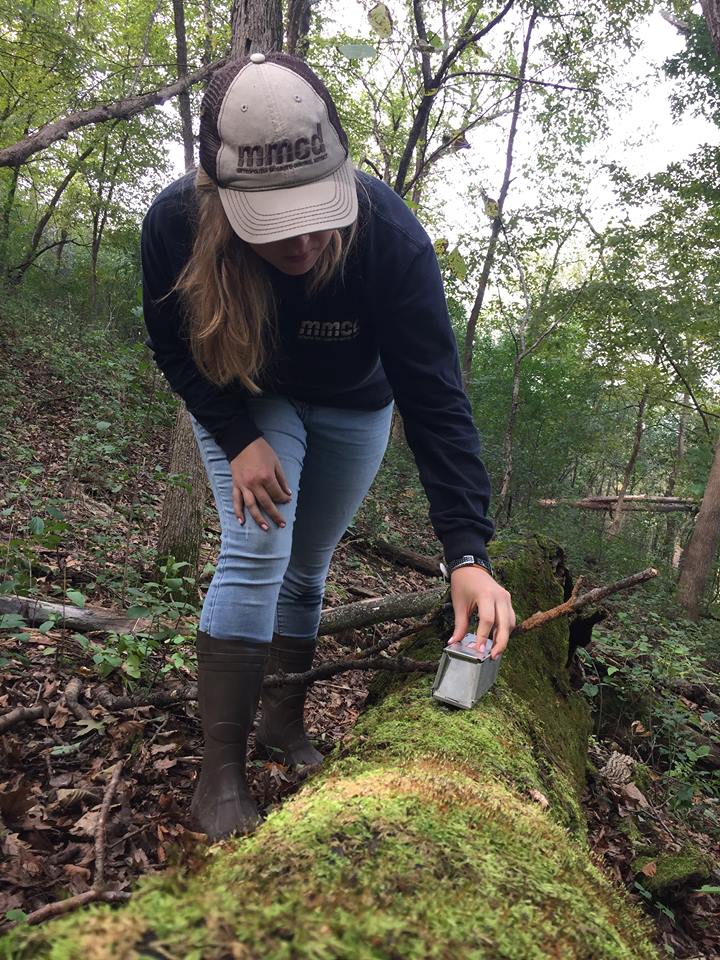
- Mammal Collections: For over 30 years, MMCD has been trapping small mammals to monitor the progression of ticks across the seven-county metro area. This sensitive technique detects ticks attached to small mammal hosts including mice, chipmunks, and shrews. It enables early tick detection in new areas, allows the measure of disease in the wild, and can be used to predict future tick abundance.
- Tick Dragging: Check out our video explaining the tick dragging method.
- Resident Submissions: See below!
Reduce Your Risk of Tick Bites
- When in deer tick habitat, stick to the center of the trail. Deer ticks hide out in dense underbrush.
- Wear light colored clothes so ticks are visible.
- Use a tick preventative on your pets. Consult a veterinarian to determine the best product for each breed.
- Use insect repellent. Follow label directions. Use the EPA tool to find the best repellent for you.
- After being in the woods, do a complete body check, shower, and vigorously towel dry.
- Put clothes in the drier on "high" for 10 minutes to kill ticks.
- Carefully check your kids and pets for ticks.
- Save activities like brush-cutting for August when all stages of deer ticks are at their lowest numbers.
If You Encounter a Tick
Finding a tick on yourself, someone else, or a pet is fairly common in Minnesota. The most important thing is to stay calm.
How to remove a tick:
- Use your fingers or a pair of fine-tipped tweezers to grasp the tick as close to the skin’s surface as possible.
- Pull upward with steady, even pressure. Avoid twisting or jerking, which can cause the mouthparts to break off.
- After removing the tick, wash the bite site with soap and water.
- Monitor the area and your overall health for any symptoms of tick‑borne illness.
If the tick’s head or mouthparts remain:
- Do not attempt to dig them out. Once the body is removed, the tick can no longer transmit disease, and the remaining parts will naturally be broken down by the body.
Important reminders:
- Remove ticks as soon as you notice them; the longer a tick is attached, the greater the risk of disease transmission.
- If you find one tick on your body, carefully check yourself for others and remove any you find promptly.
MMCD Free Tick Identification Service Instructions
Option 1: Mail a Tick to MMCD
- Step 1
- Ensure the tick is killed prior to mailing — store tick in rubbing alcohol for approximately one day to make sure it’s dead.
- Step 2
- Wrap the tick in some tissue or paper toweling and lightly soak the package in water or rubbing alcohol. We want the tick to arrive slightly damp.
- Step 3
- Place your package in a re-sealable plastic bag such as a sandwich bag.
- Step 4
- Enclose your name, address, and a daytime phone number.
- Step 5
- Place in a padded envelope and mail it to: MMCD, Attn: Tick Lab, 2099 University Ave. W, St. Paul, MN 55104
If your tick has potentially fed (contains blood) place it into a hard container such as a pill bottle before continuing to follow these directions.
Option 2: Electronic Picture Submission of a Tick
Ensure that your tick is killed prior to taking a photo - store in rubbing alcohol for several hours.
How to take a good picture:
- Place the tick on a white background
- Position the tick so that its back (shield) is facing the camera
- Adjust your distance directly above the tick to get a sharp image, usually 3-5 inches
- Capture an image without flash in an area with good lighting
- Repeat for the opposite side of the tick ensuring the legs and mouth parts are clearly visible
Once you are ready, please click the button below to access our electronic submission form.