

Weekly Update – August 19th – Nuisance Mosquitoes and Disease Vectors Decline
August 25, 2025
Weekly Update – September 3rd – A Slight Increase to Begin the Month, but Not Likely to Last
September 9, 2025
Mosquito numbers are very low throughout the District and the end of the season may be close.
The late August bump didn't happen this year and the total number of adult mosquitoes is very low.
Every Monday night starting in mid-May through September, the Metropolitan Mosquito Control District sets out a variety of mosquito and black fly traps throughout the district and employs a network of sweep net collections done by employees and volunteers. Any insects collected are brought back to our lab on Tuesday to be identified throughout the week with maps published to show current mosquito and black fly activity.
Based on the 10-year average, there is a historical slight uptick in mosquitoes in the last week of August (skewed by a huge surplus in 2016) and there was a potential for that to happen in 2025 with lots of rain towards the end of the month. However, the trap totals from the week of August 26th show that mosquito numbers throughout the District have continued to drop. With overnight temperatures expected to be in the 40s this week, we may very well be approaching an early end to mosquito season.
According to MMCD Entomologist, Dr. Scott Larson, "virtually all mosquitoes can't power their flight when temperatures are below 55 degrees, so as soon as the temperatures at dusk are consistently below that, we will stop our adult mosquito surveillance." Traps were set this week and typically we continue until at least mid-September, but temperatures may see us ending surveillance a little early this week.
Below are maps showing all human-biting mosquitoes (left) and Culex mosquitoes (right) collected in CO2 and Gravid traps on August 25th-26th:
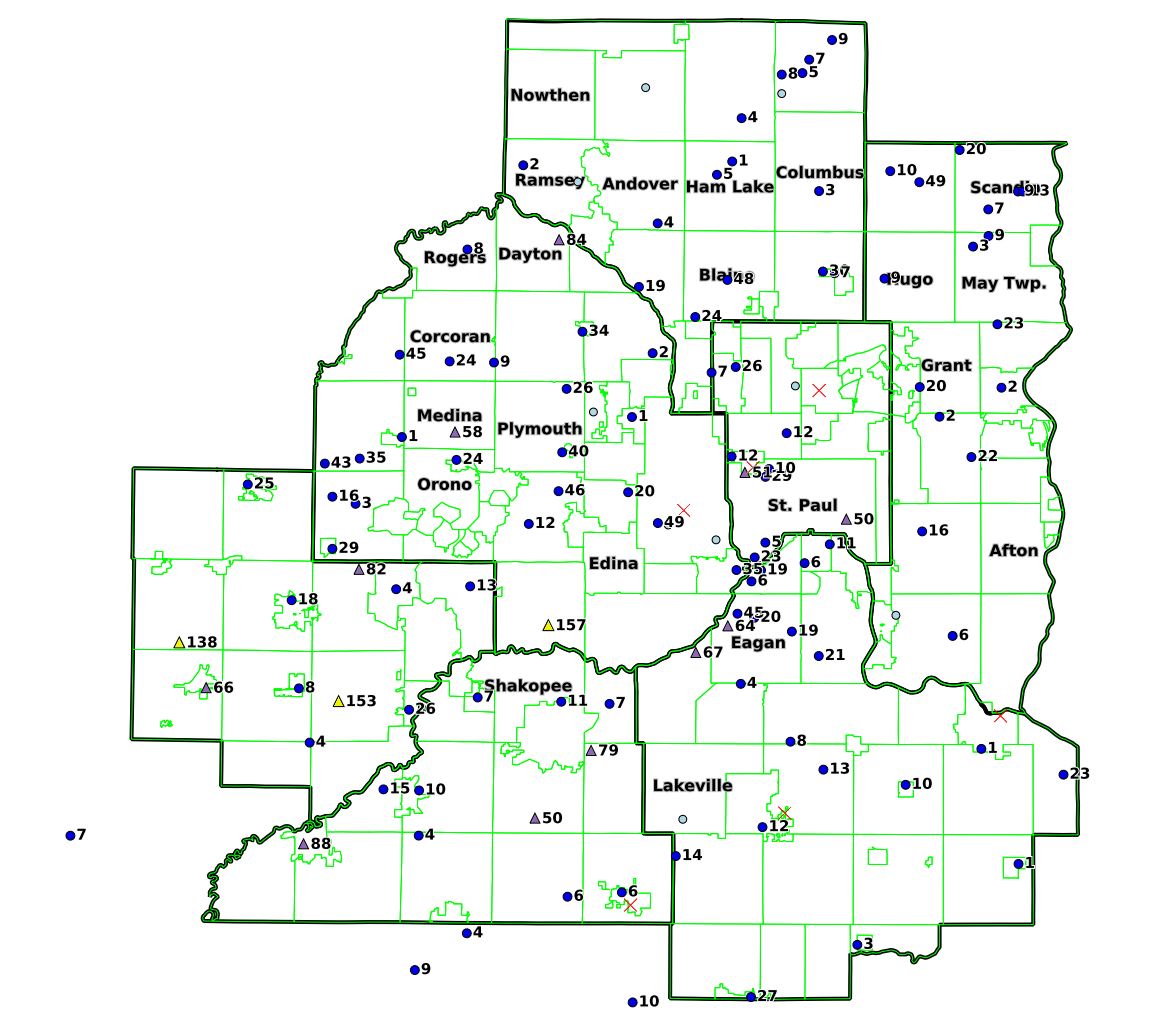
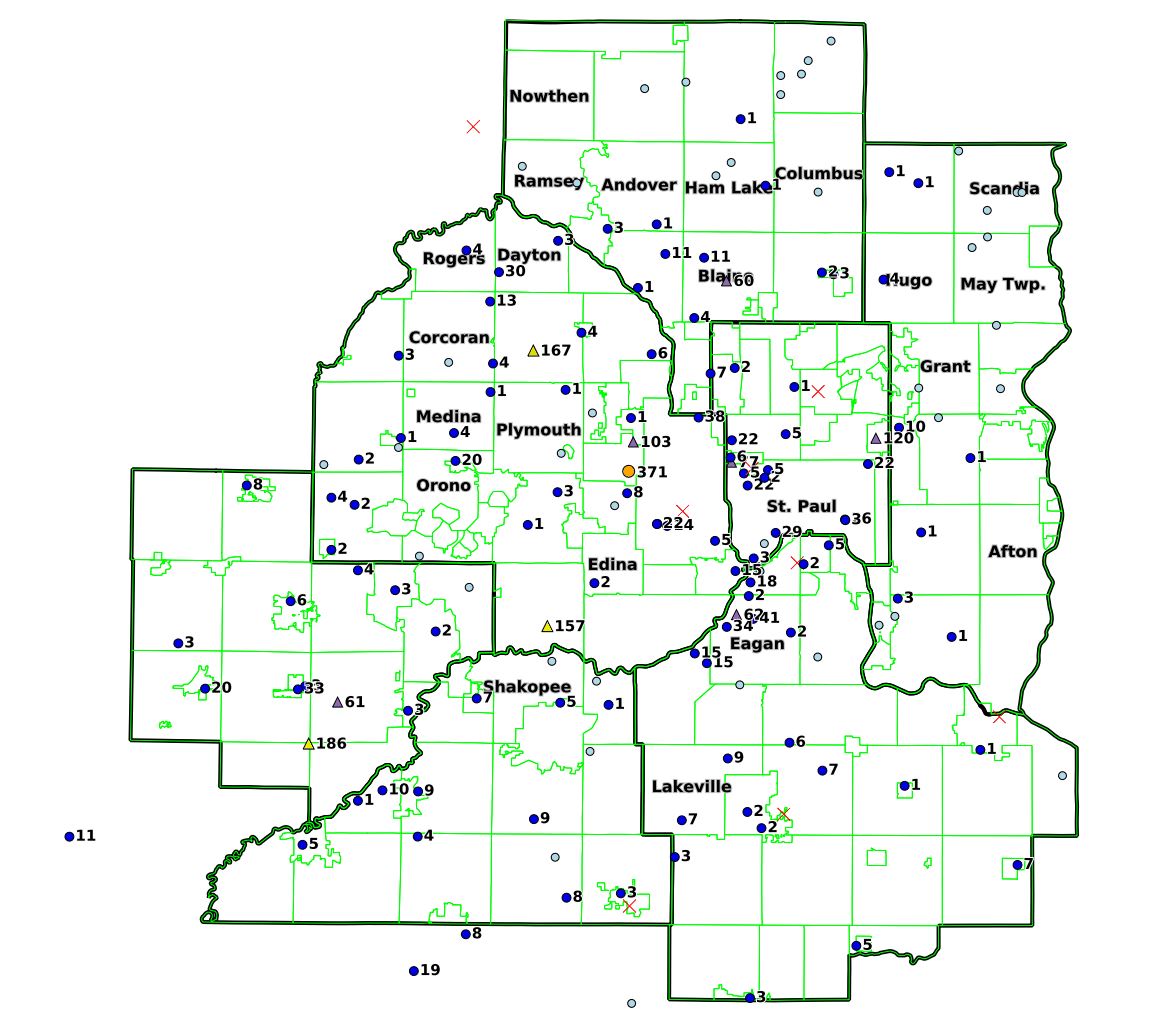
West Nile virus remains active - infection rate increases, but number of mosquitoes declines.
Last week the Minnesota Department of Health reported that 20 cases of West Nile virus have been reported in 2025 and 2 of those infected have died. MMCD surveillance indicates that the infection rate of mosquitoes collected is rising, but that is a feature of fewer overall mosquitoes being collected while the number of mosquitoes infected with West Nile virus remains steady.
According to MMCD Vector Ecologist, Dr. Jordan Mandli, "At this stage in the season, the virus is 'on the wing', meaning both birds and mosquitoes are already infected and actively spreading WNV. As Culex pipiens, a species that feeds heavily on birds, becomes more dominant in our pools, infection rates are likely to rise." The species most likely to spread West Nile virus to humans is Culex tarsalis, and those numbers have continued to decline from their peak in late July.
The bottom line is that it's always important to avoid mosquito bites this time of year, but the biggest threat of West Nile virus infection has likely passed.
The Minnesota State Fair was a Success!
Thank you to everyone who stopped by the MMCD booth at the Minnesota State Fair over the last two weeks! We had great conversations with thousands of people about ticks, mosquitoes, black flies, West Nile virus, surveillance data, drones, and all kinds of other things.
If you did not make it out to our Fair booth, check out the video below which played on loop:


